CASE · EDITORIAL · CONCEPT · LISBON + KYOTO · 12 DAYS · 50 MM · 2026Field notes
Street portraits,Lisbon and Kyoto
One brief, two cities, twelve days. People photographed where they already are, with their permission, for a two-city issue of Maré Journal.
A concept. Maré Journal is the brief's working title, not a client, and nothing here has been published. The page shows how we would make and check the series; the frames are licensed stand-ins, credited by name at the foot of the page.
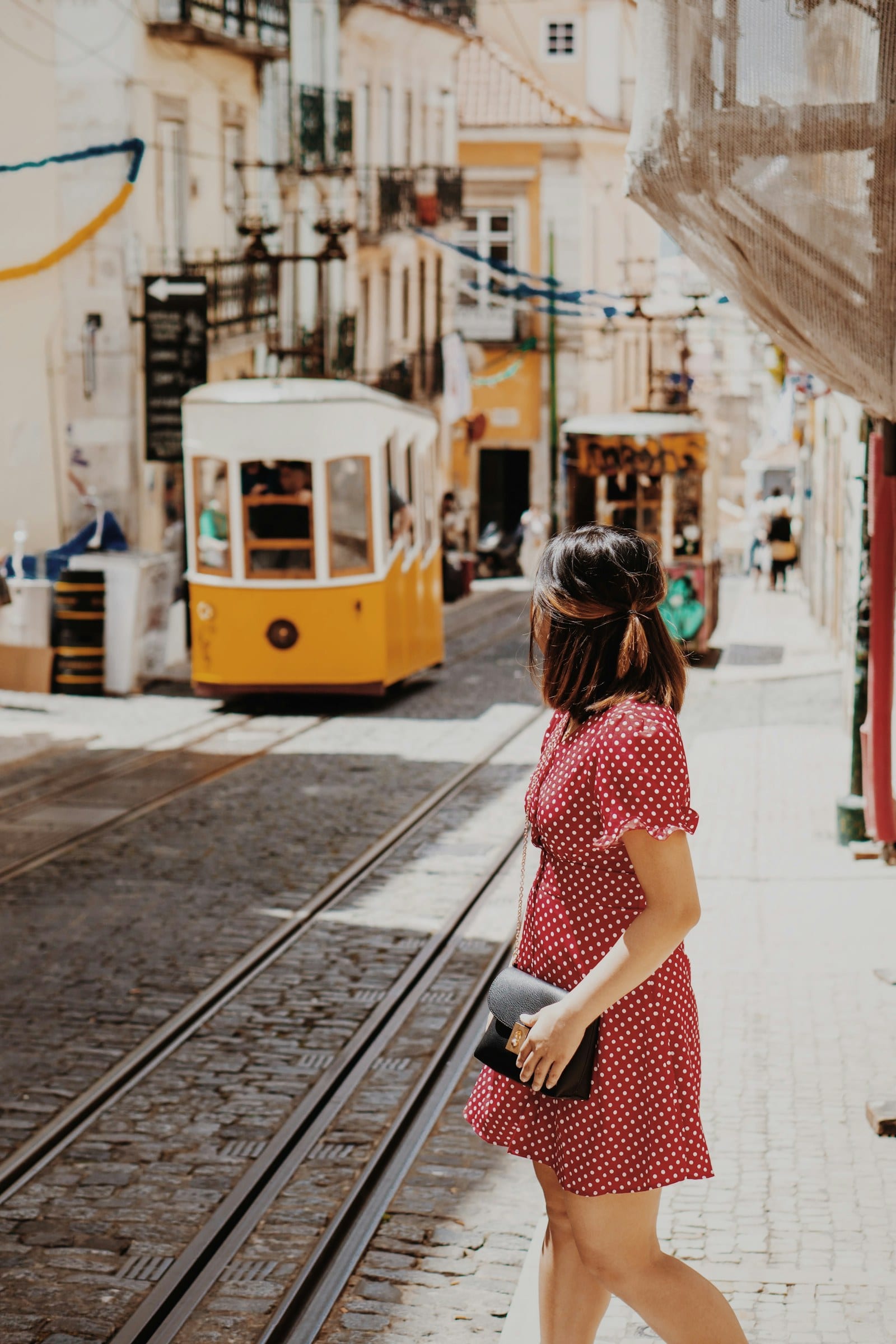
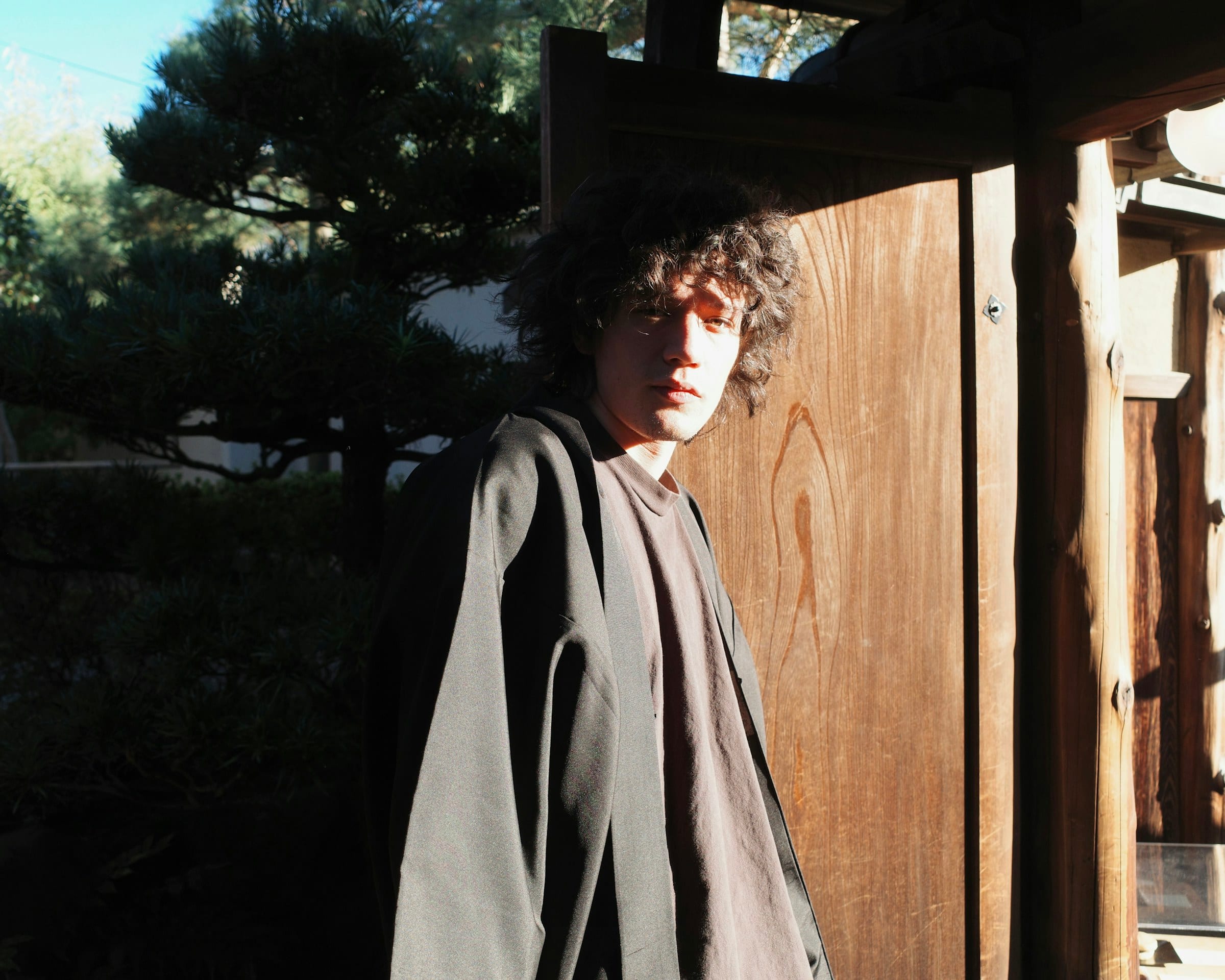
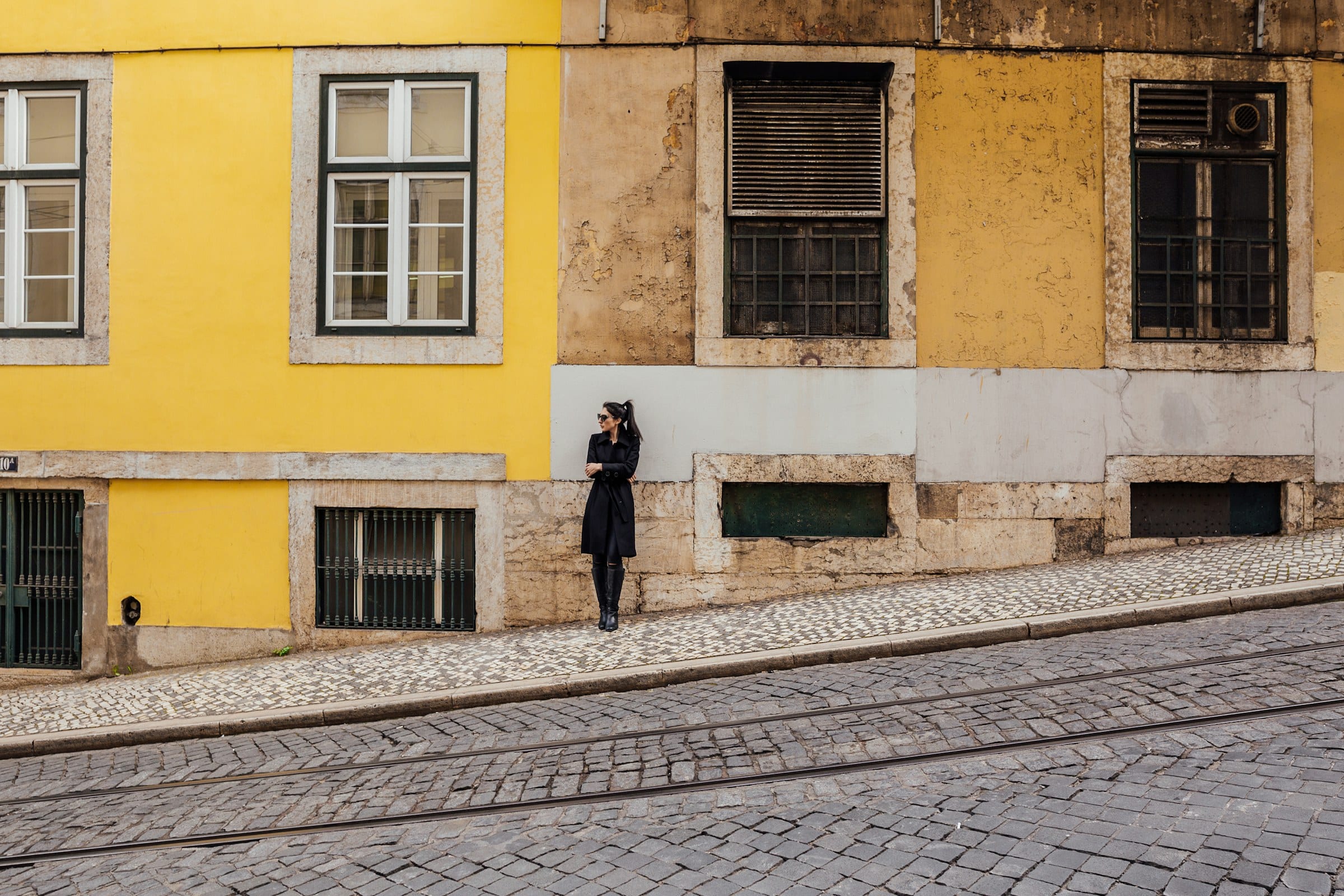
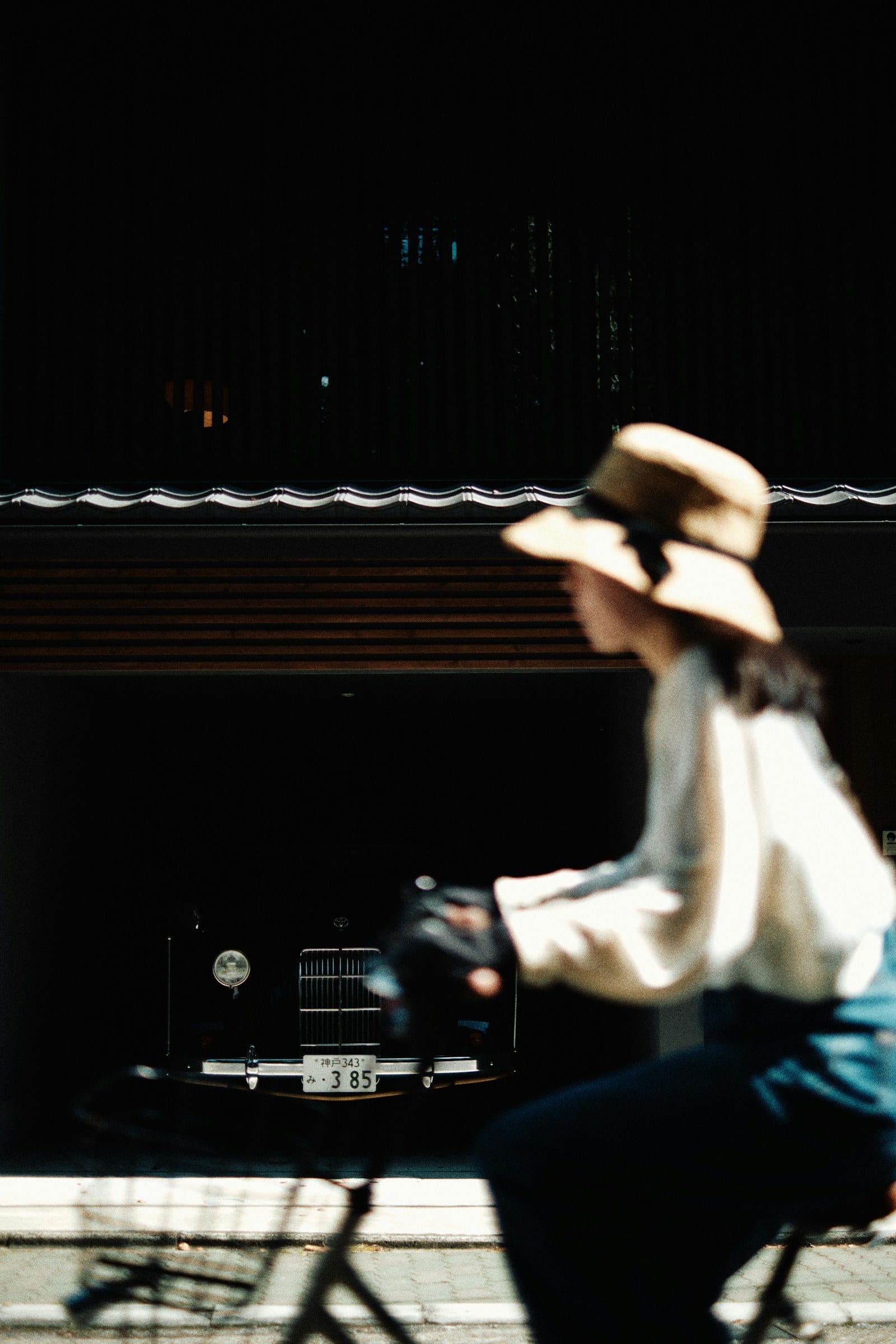
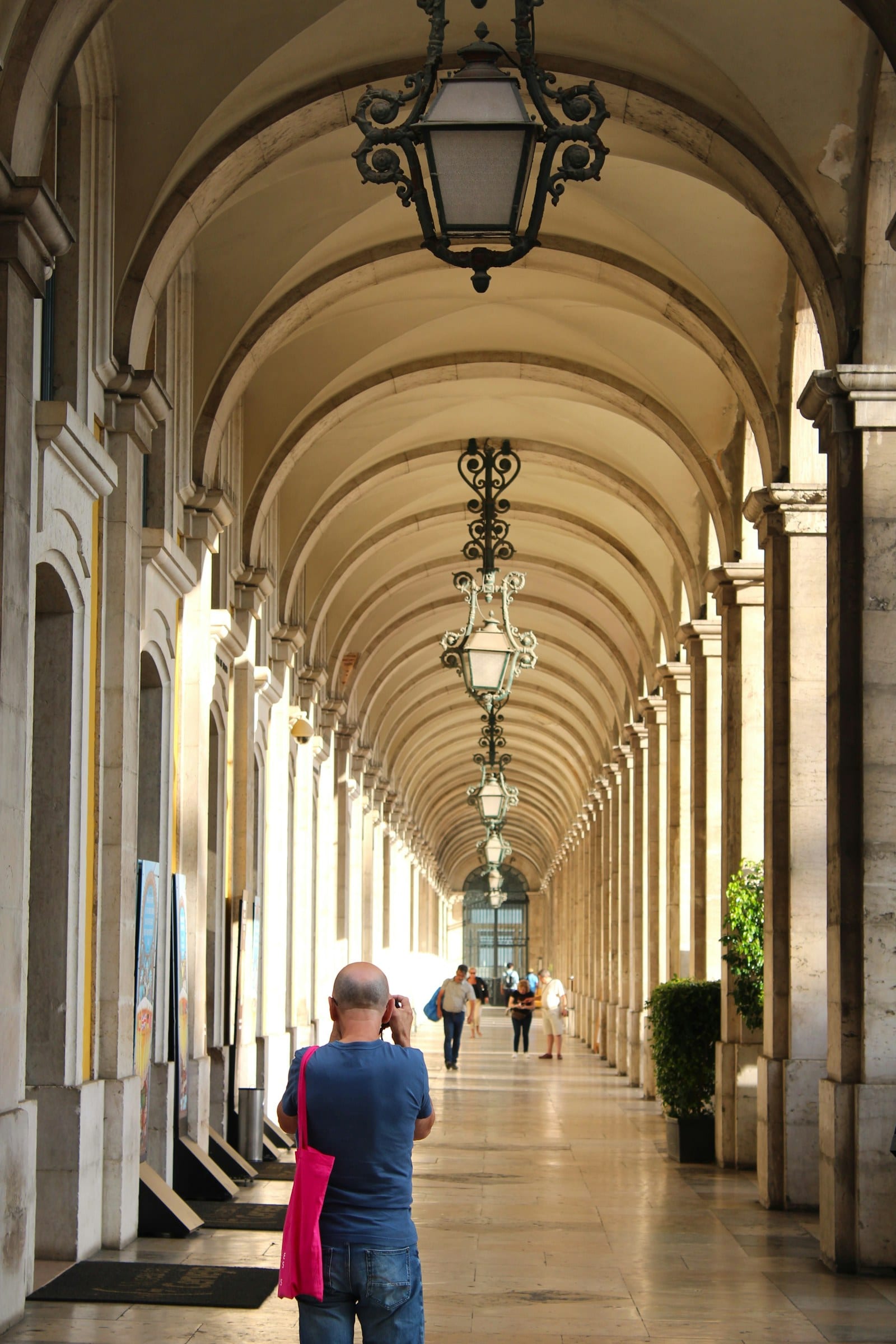
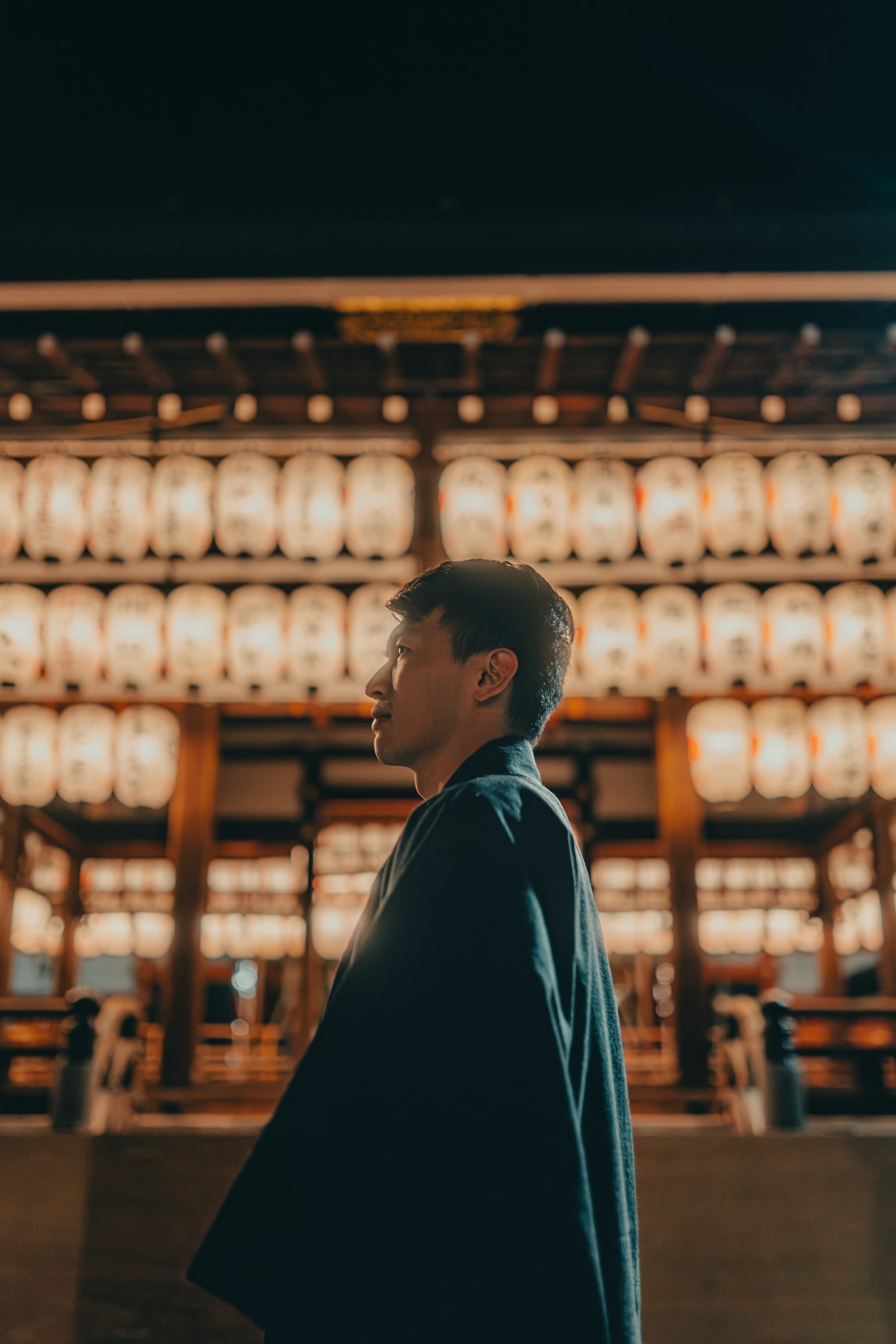
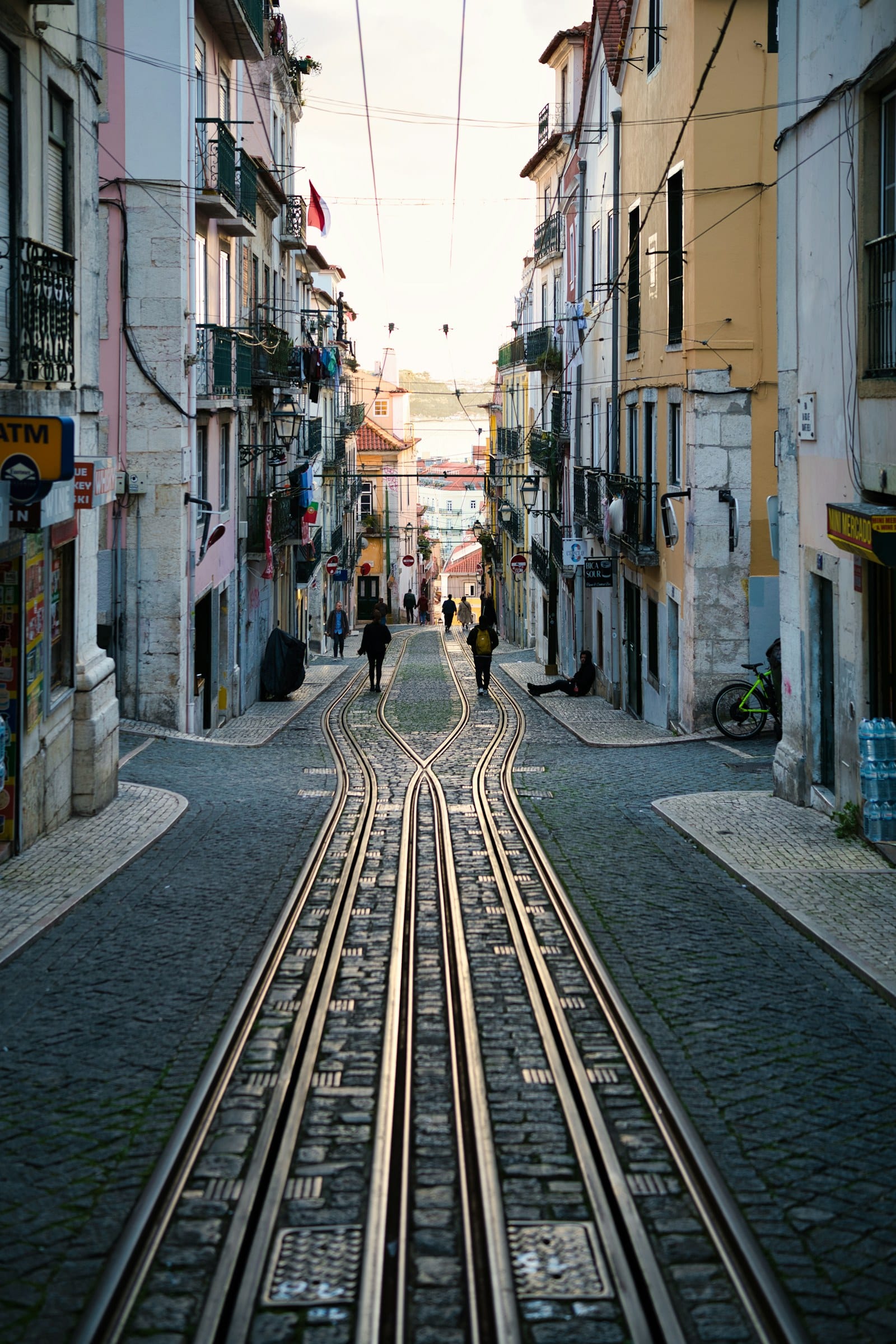
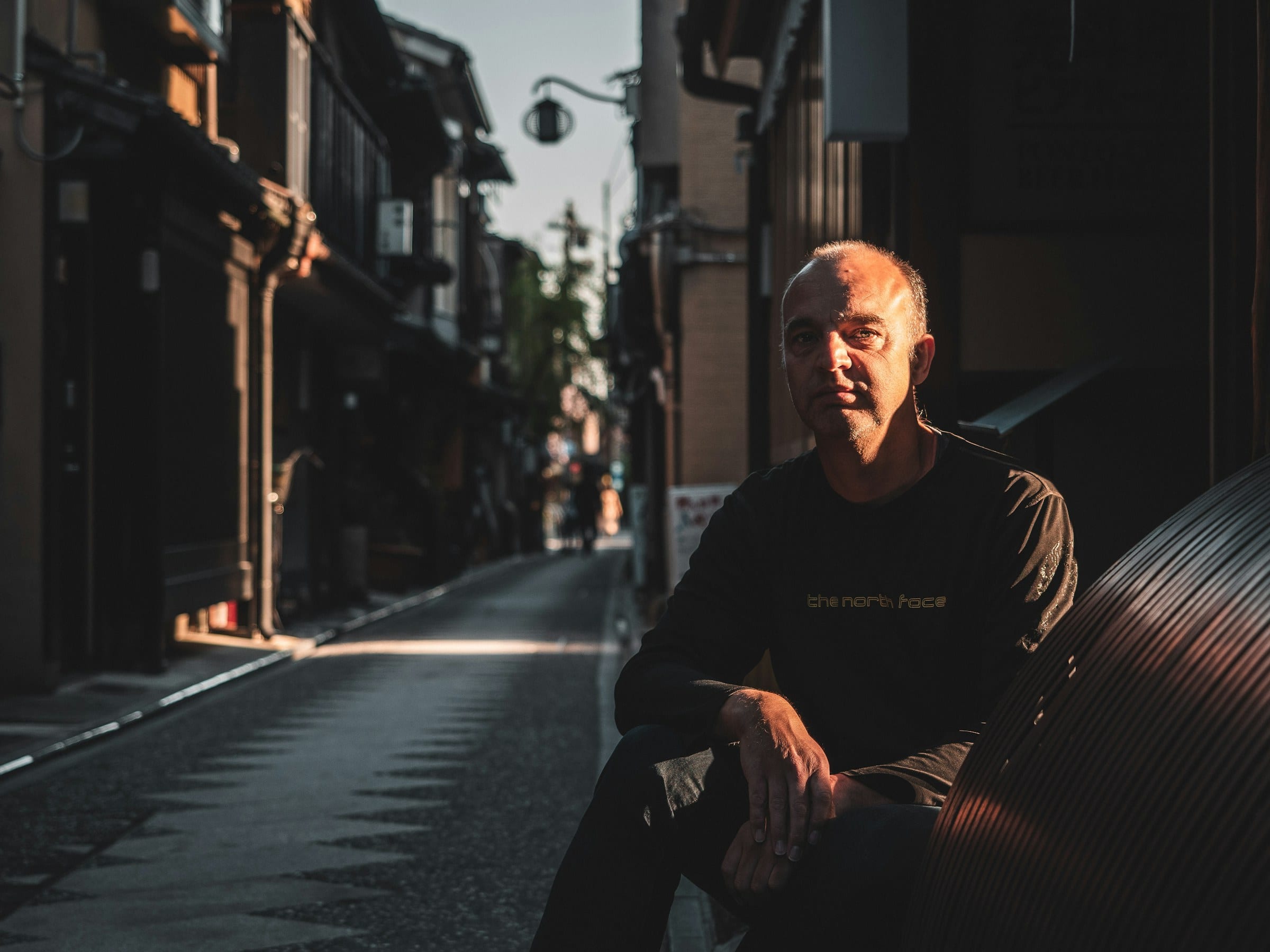
Left Lisbon, right Kyoto. Same 50 mm lens, same distance, same grade. Each pair is matched by what the light is doing, not by what the place looks like.
FIELD NOTES
How it was made
Two days of walking, no camera.
The first two days in each city were scouting walks, at the hours we meant to shoot. We kept a map of walls, doorways and corners where the light did something useful, and when. Lisbon gave us 41 marks, Kyoto 33. We shot at 19 of them.
Ask first, then photograph.
Every portrait starts with a question, never with a shutter. In Kyoto a translator asked with us. The consent form, in Portuguese, Japanese and English, was signed before the first frame. We asked 58 people; 24 said yes. A no ended the conversation, not started a negotiation.
One camera, one lens, one distance.
A single 45 MP body and a 50 mm lens for the whole series, so the space between us and the person is the same in both cities: about a metre and a half. No zoom to stand back behind. If the frame needed to change, we moved.
Lisbon: hard sun, yellow walls.
Lisbon's light is direct and the city is painted to catch it. We never put a face in the sun. We put it a step into the shade, facing a sunlit yellow wall, and let the wall do the lighting: warm, broad and soft on the skin, with hard light still in the background.
Kyoto: shade, paper, lanterns.
Kyoto's light arrives filtered: under eaves, through shoji paper, off pale gravel. We worked in open shade by day and under paper lanterns after dusk. No flash, no reflectors carried in; the only light added to the series was what was already hanging there.
One grade for both cities.
A colour chart was shot at the start of every session. One profile was built from those charts and applied to every frame, Lisbon and Kyoto alike, then a light grade on top: lifted blacks, warmth held back in Lisbon so the walls read yellow and not orange.
The grade, on one portrait.
Drag across the frame. The right side is the delivered file. The left side is not the raw file: it is a CSS filter laid over the same picture to show roughly what the grade changed. Flatter, warmer, lower in contrast, with the shadows sitting on grey instead of black.
Grade comparison · approximation on the left · kyoto-doorway, 50 mm, f/2.8, 1/500
A closing set, in the studio.
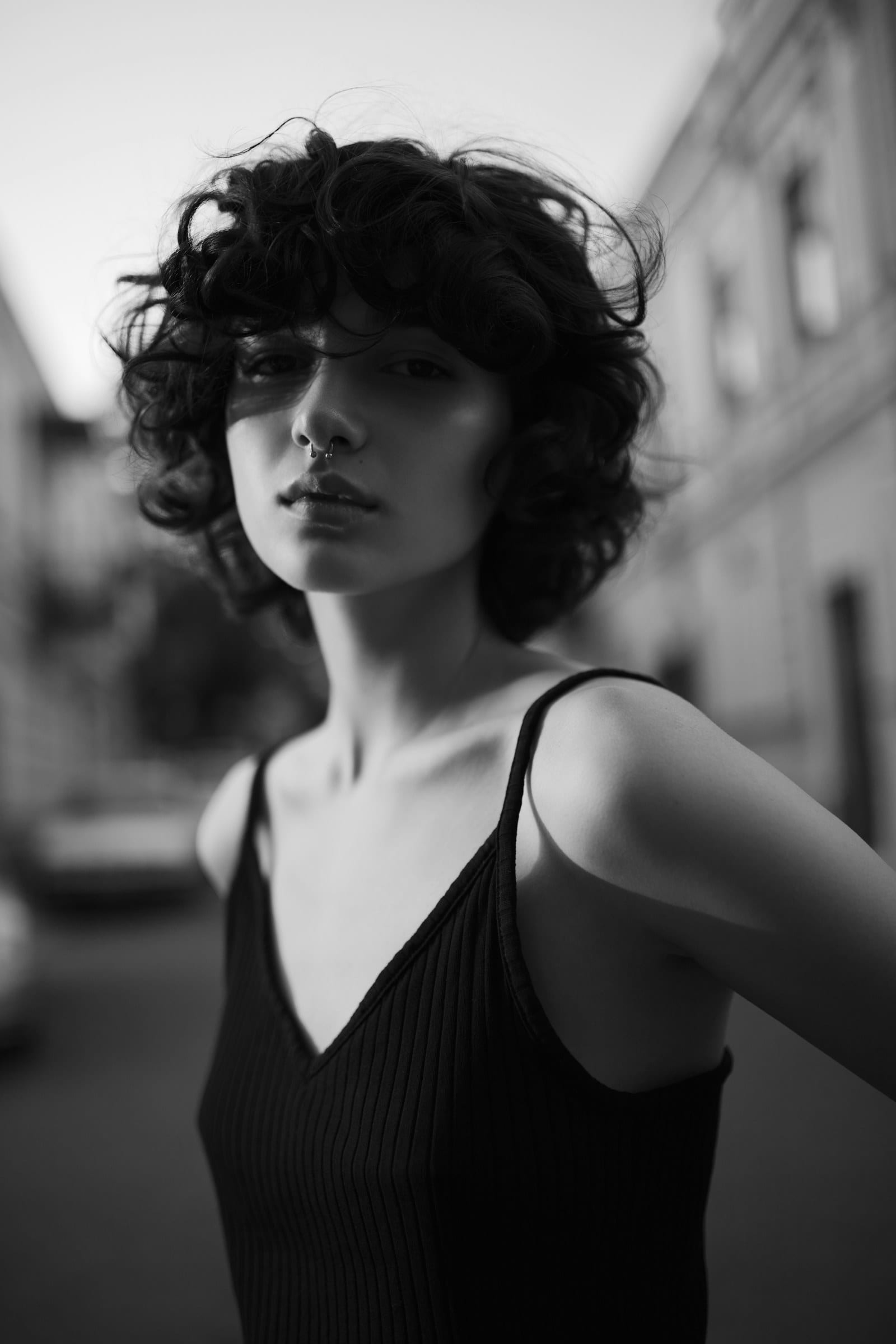
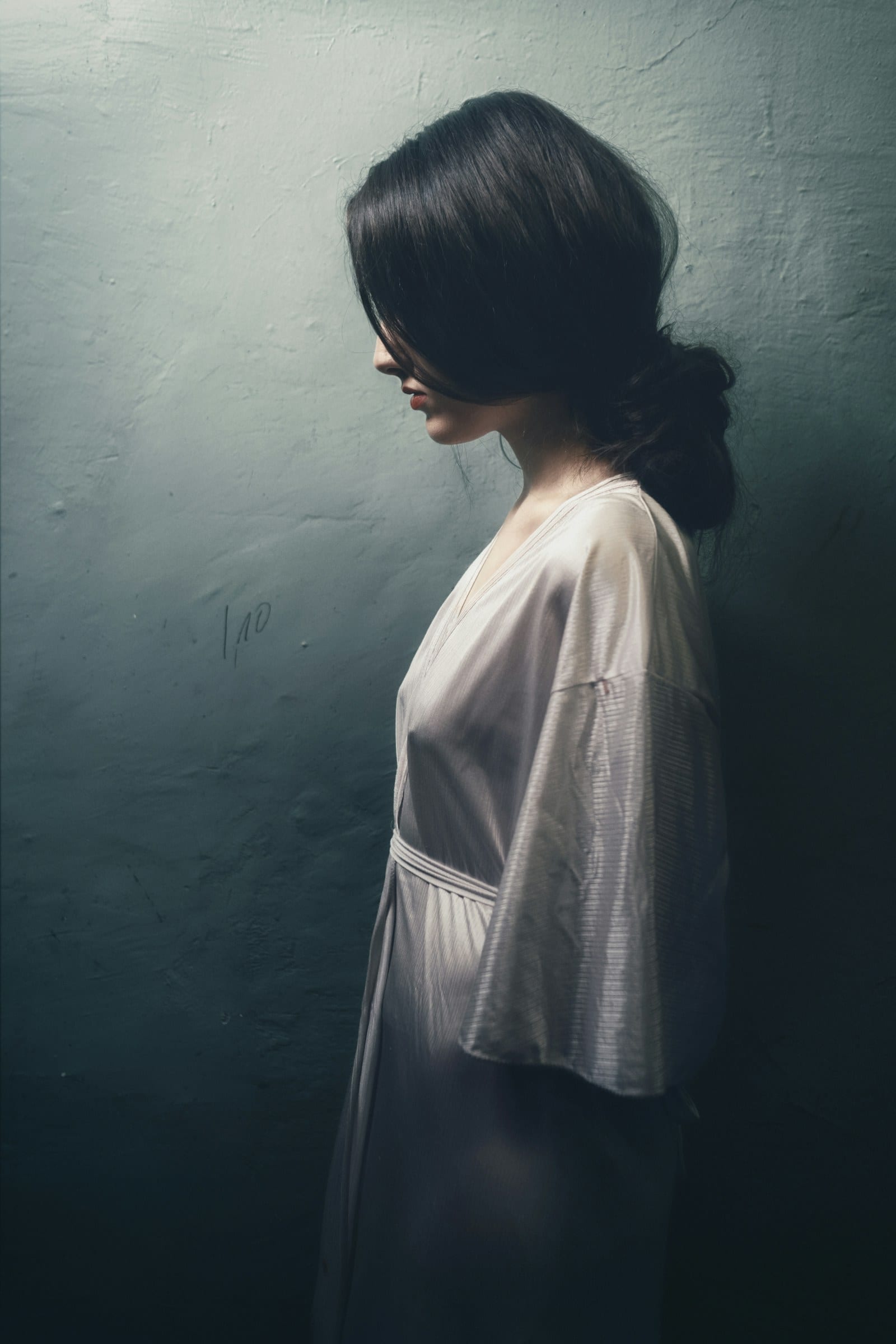
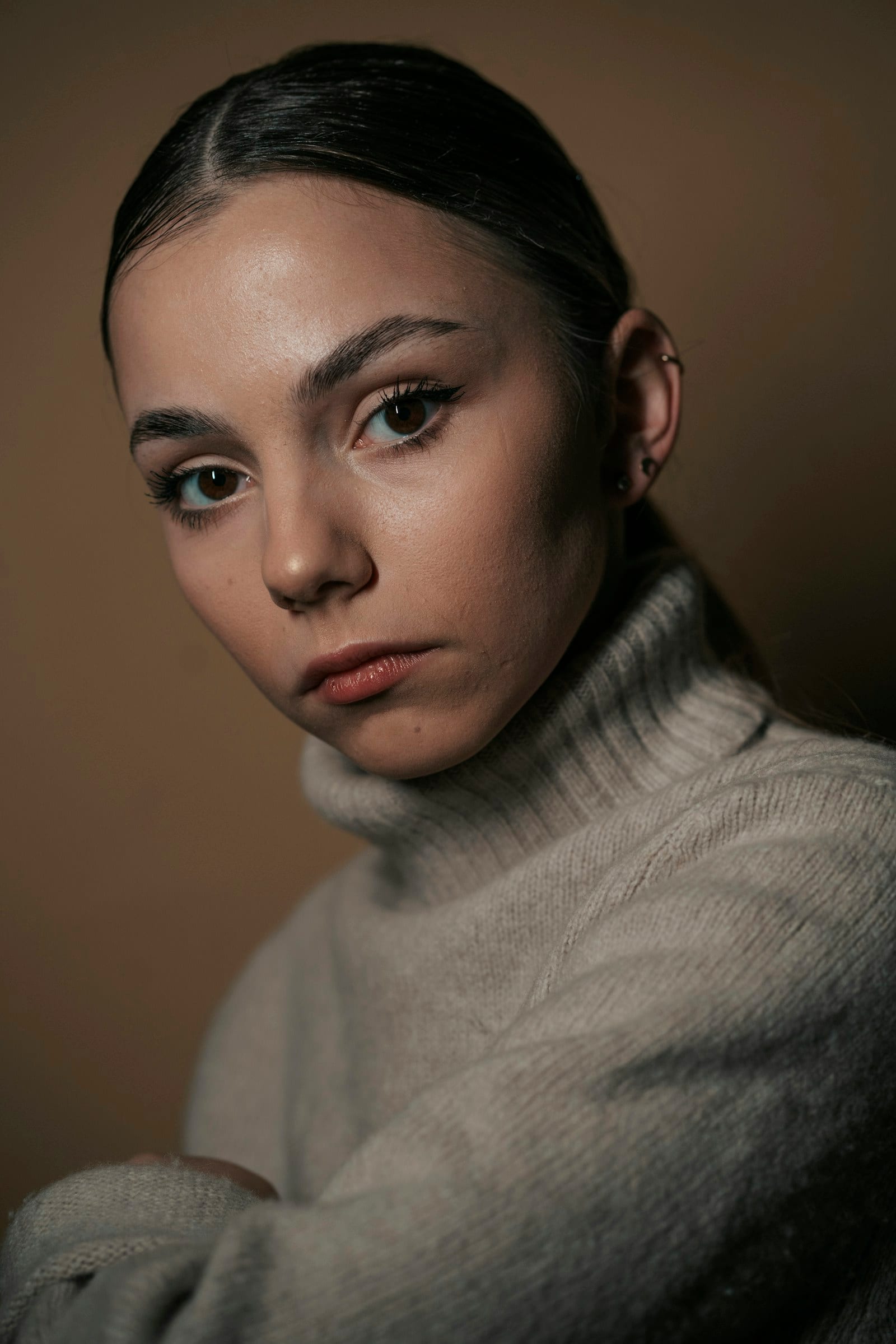
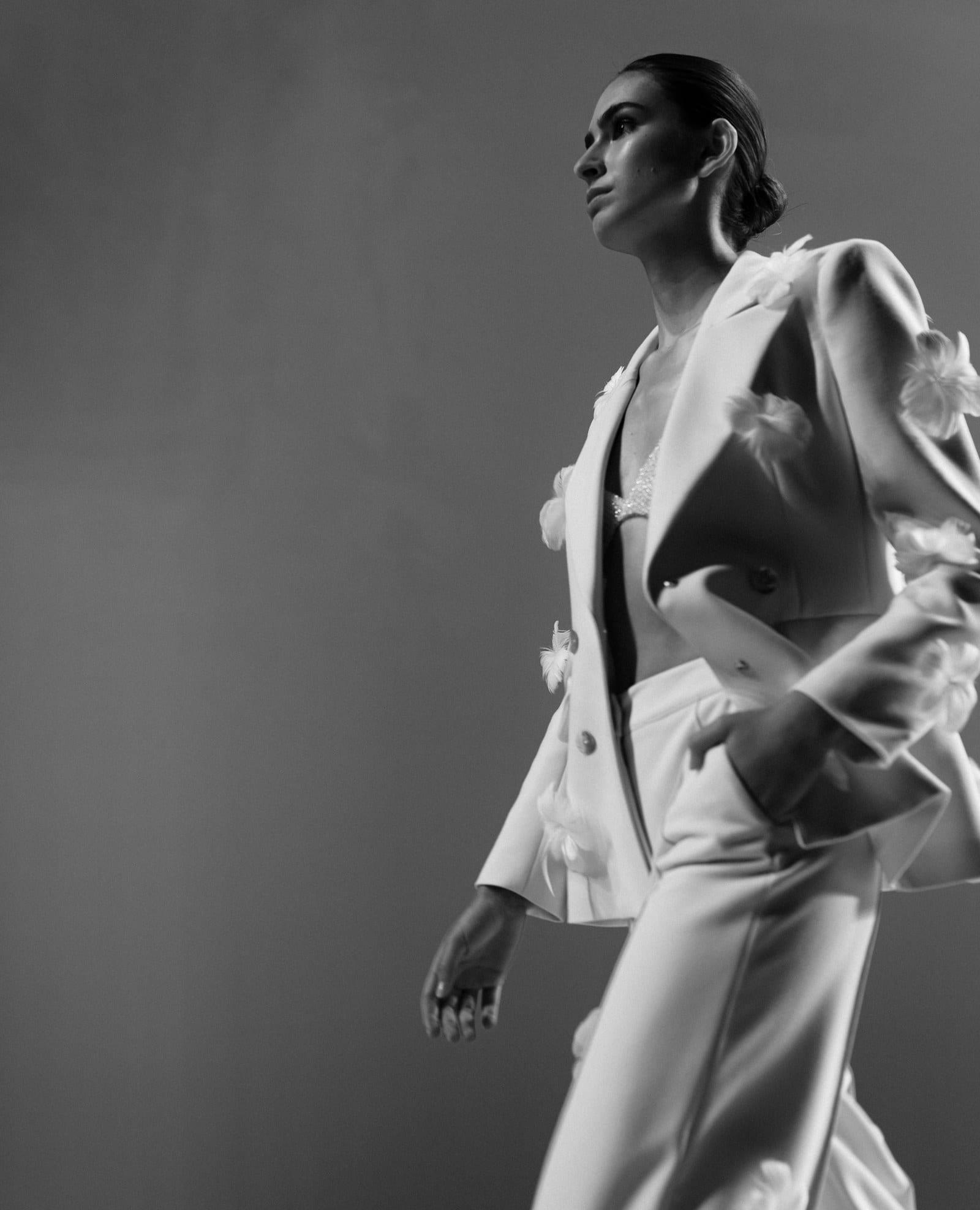
The street set has no added light at all. The last pages of the issue do the opposite on purpose: four portraits made in the studio after the trip, each with one light and a painted backdrop, so the issue closes on a face nothing competes with. Two are printed in black and white.
Proof sheet
| check | Lisbon | Kyoto |
|---|---|---|
| lens and body | 50 mm · 45 MP · f/2–f/4 | 50 mm · 45 MP · f/1.8–f/2.8 |
| portraits in the set (consent recorded) | 12 of 12 signed | 12 of 12 signed |
| white balance spread across the set (max 500 K) | 5,050–5,400 K · 350 K | 4,900–5,350 K · 450 K |
| skin-tone consistency, ΔE2000 to the set mean (max 3.0) | median 1.6 · worst 2.7 | median 1.9 · worst 2.8 |
| colour accuracy, ΔE2000 on the chart (max 2.0) | mean 1.1 · worst 1.8 | mean 1.2 · worst 1.9 |
| highlight / shadow clipping (max 0.1% / 0.5%) | 0.04% / 0.2% | 0.02% / 0.3% |
| print size at 300 dpi (spread: 460 × 300 mm) | smallest file 6,000 × 4,000 px · 508 × 339 mm | smallest file 5,800 × 3,867 px · 491 × 327 mm |
| luminance noise in the midtones (max 2.0%) | passedworst 0.9%, at ISO 800 | didn't passthe lantern portrait, at ISO 6400, measures 2.6%; printed on one page, not across the spread |
| retouch log | 14 edits · dust and stray hairs | 9 edits · dust and stray hairs |
| profile and rights metadata | Adobe RGB masters · sRGB web set · embedded | Adobe RGB masters · sRGB web set · embedded |
Two cities, one standard. The white balance and skin-tone rows are the ones that matter for a series: they say whether a reader turning from Lisbon to Kyoto sees the same eye at work, or two trips.
The lantern portrait didn't pass. Its noise sits above our limit at spread size, and noise reduction strong enough to fix it smeared the paper texture of the lanterns. We kept the grain and printed it smaller, at 230 × 300 mm, where 2.6% reads as texture, not as damage.
Provenance
The rules of the series. Nothing staged beyond asking someone to stay where they were. No composites: every picture is one exposure, and no sky, person or sign was added or removed. Retouching is limited to sensor dust and stray hairs, and every edit is in the retouch log. Every person in the set signed a consent form, in their own language, before the first frame.
The status of the case. A concept: the brief, the journal and the proof sheet show how we would make and check this series. It has not been commissioned or published, and claims nothing about readers or sales. The photographs on this page are licensed stand-ins, by:
Julian Dik (lisbon-tram) · Khachik Simonian (lisbon-facade) · Rui Alves (lisbon-arcade) · Maksim Shutov (lisbon-tracks) · Zeyu Chen (kyoto-doorway) · Serg Magpie (kyoto-cyclist) · Sir. Simo (kyoto-lanterns) · Mike Kilcoyne (kyoto-alley) · Aiony Haust (studio-portrait-a) · Velizar Ivanov (studio-portrait-b) · Teslariu Mihai (studio-portrait-c) · Alina Bordunova (studio-portrait-d)
A product, a spaceor a story to photograph?
Send a short brief or write to us. We'll come back with questions, then one idea for the shoot before anything is booked.
studio@halide.studio