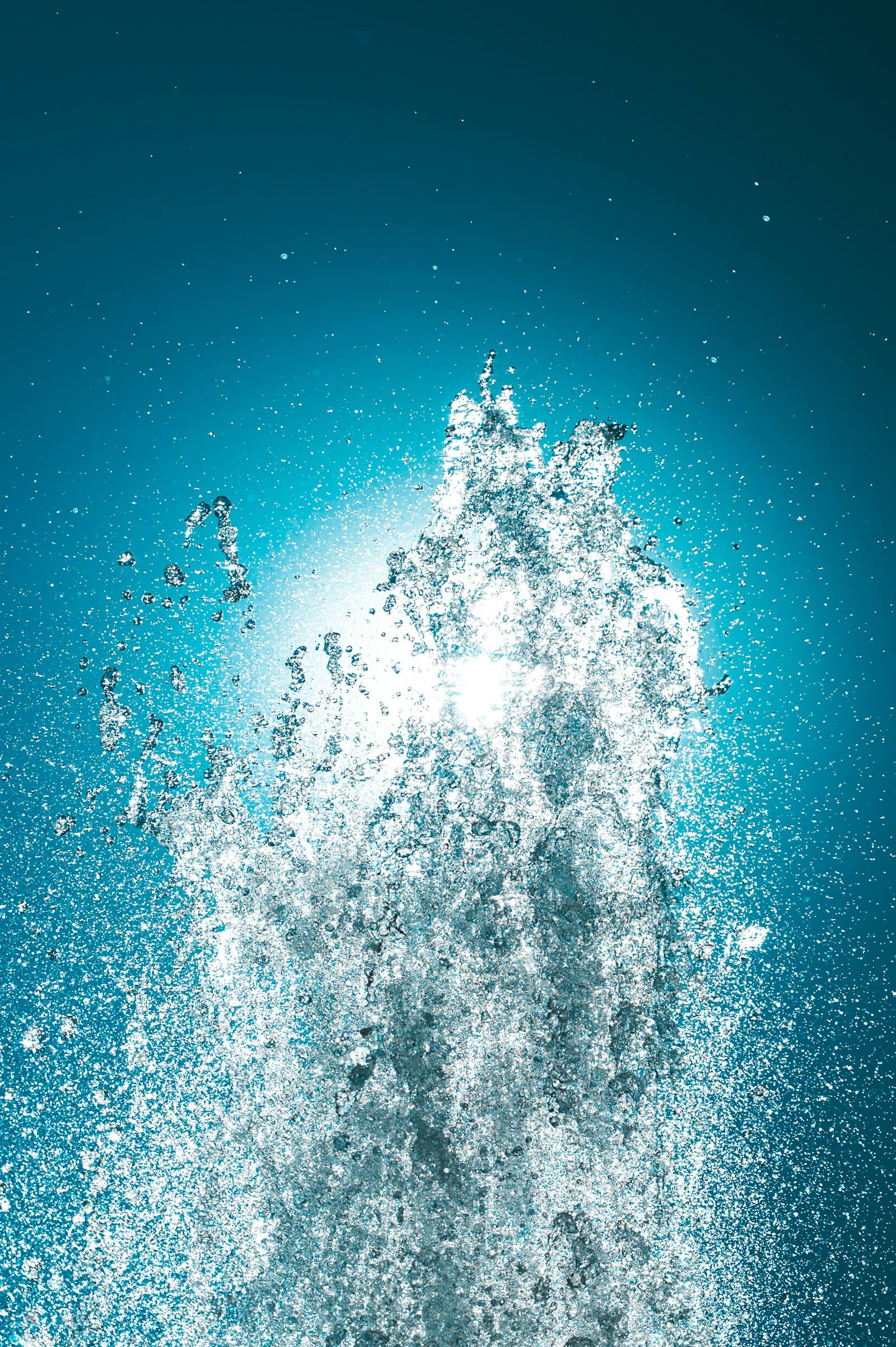
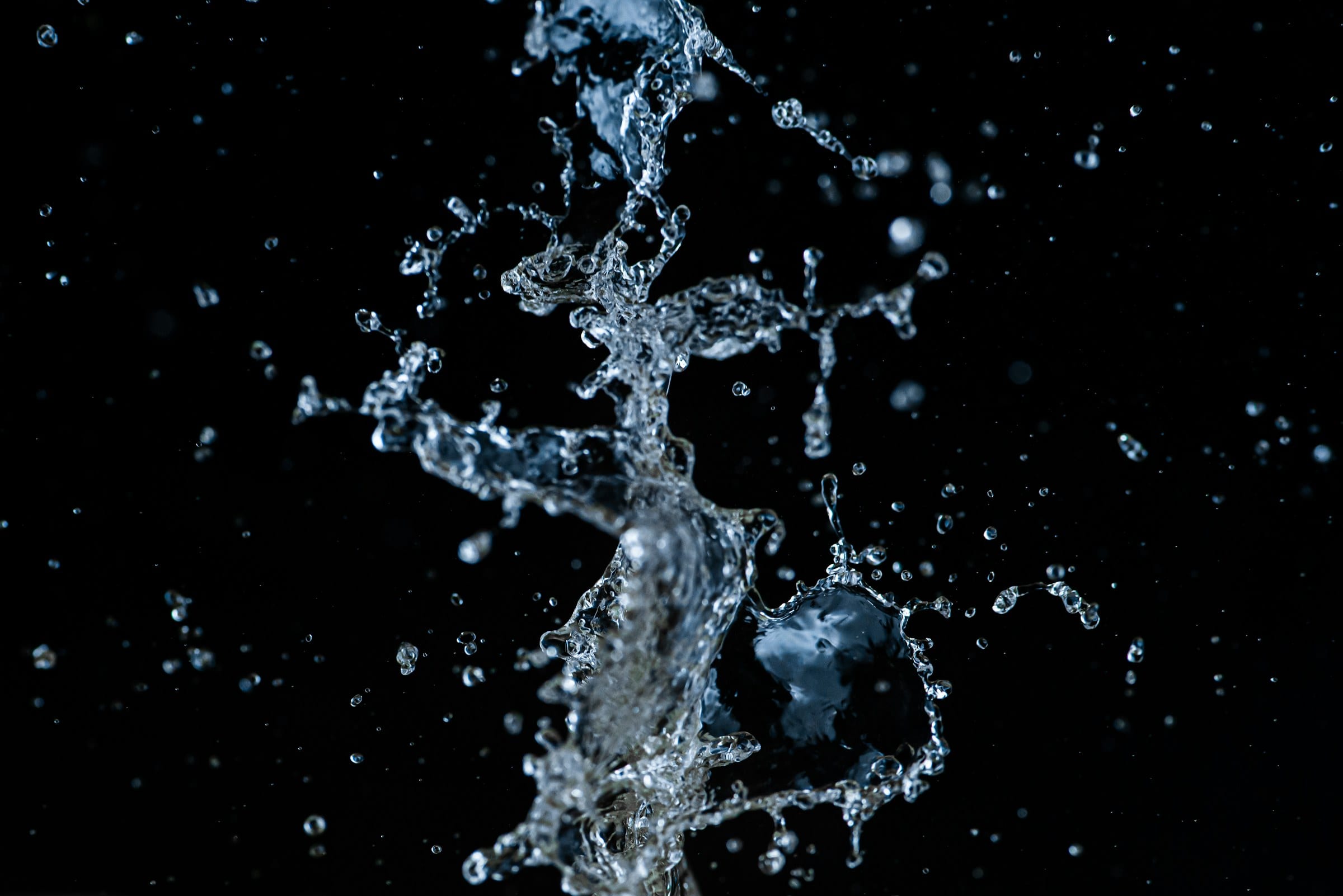
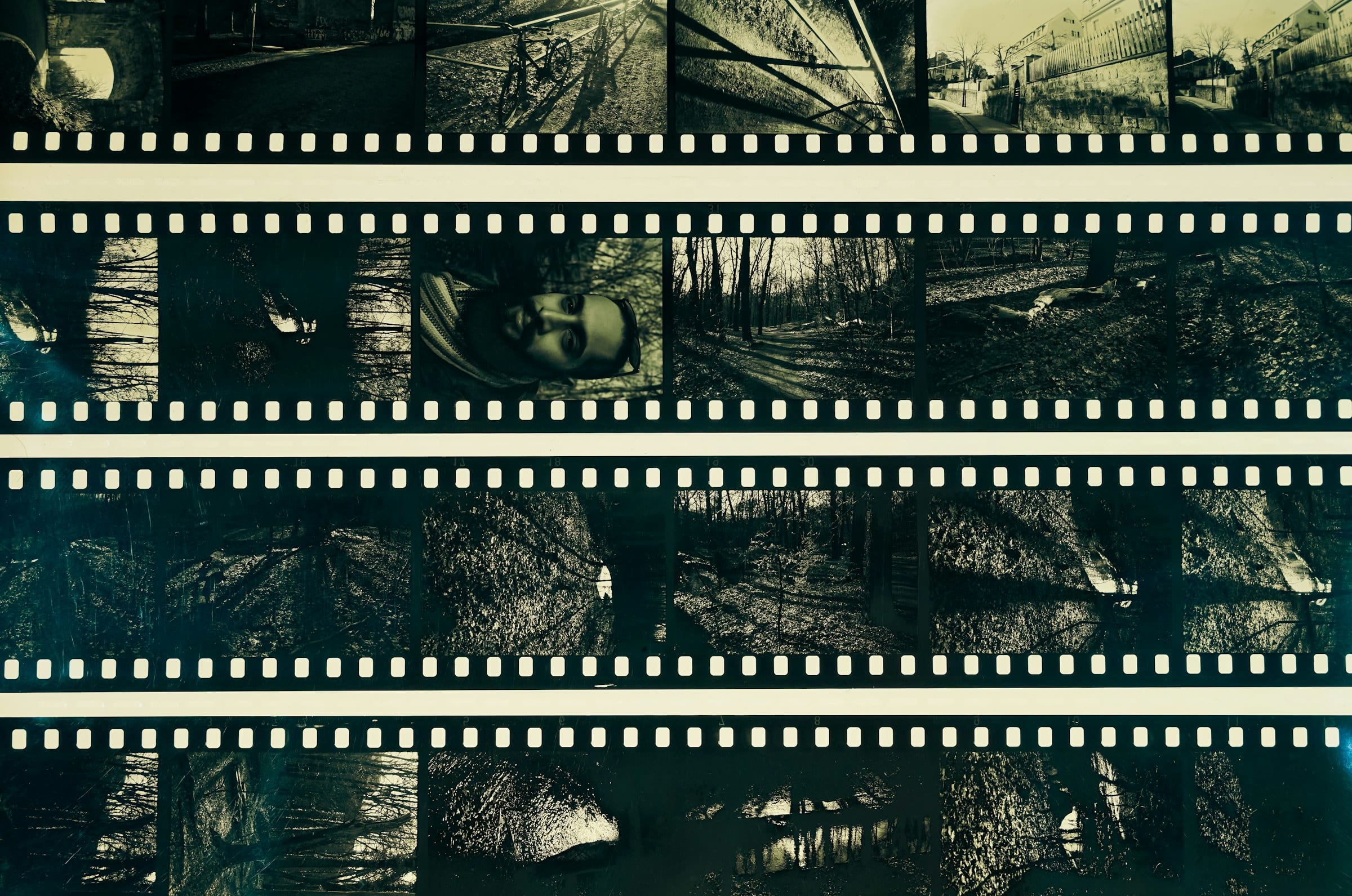
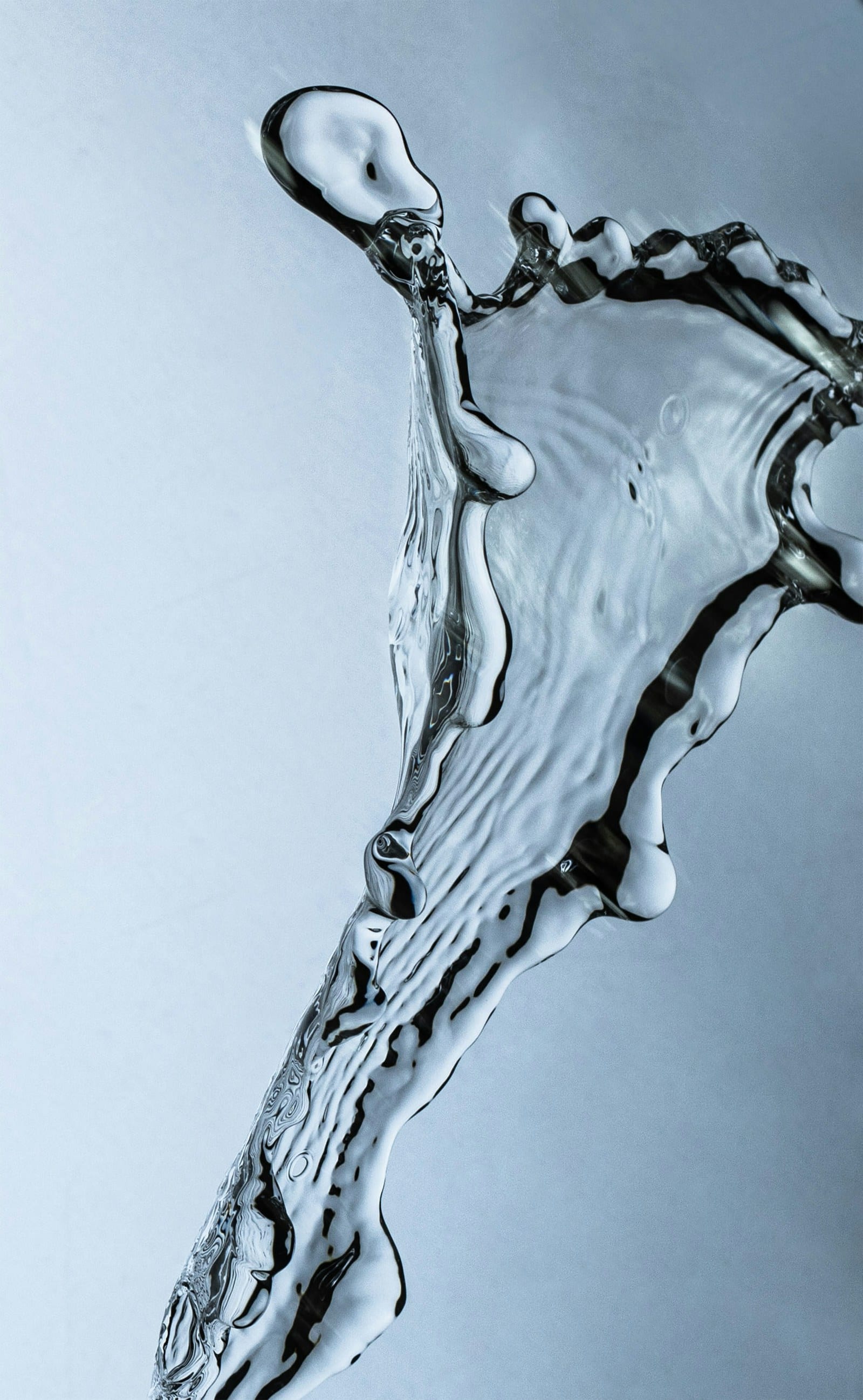
A fragrance named for a water spirit. The brief was one sentence: make the glass and the water feel like the scent. We beaded the glass with water and shot it with one light behind it and almost nothing else.
Ondine is an invented brand, made for this portfolio. The frames on this page are licensed photographs standing in for the shoot, credited by name on the credits page. The plan, the light, the grade notes and the proof sheet are ours.
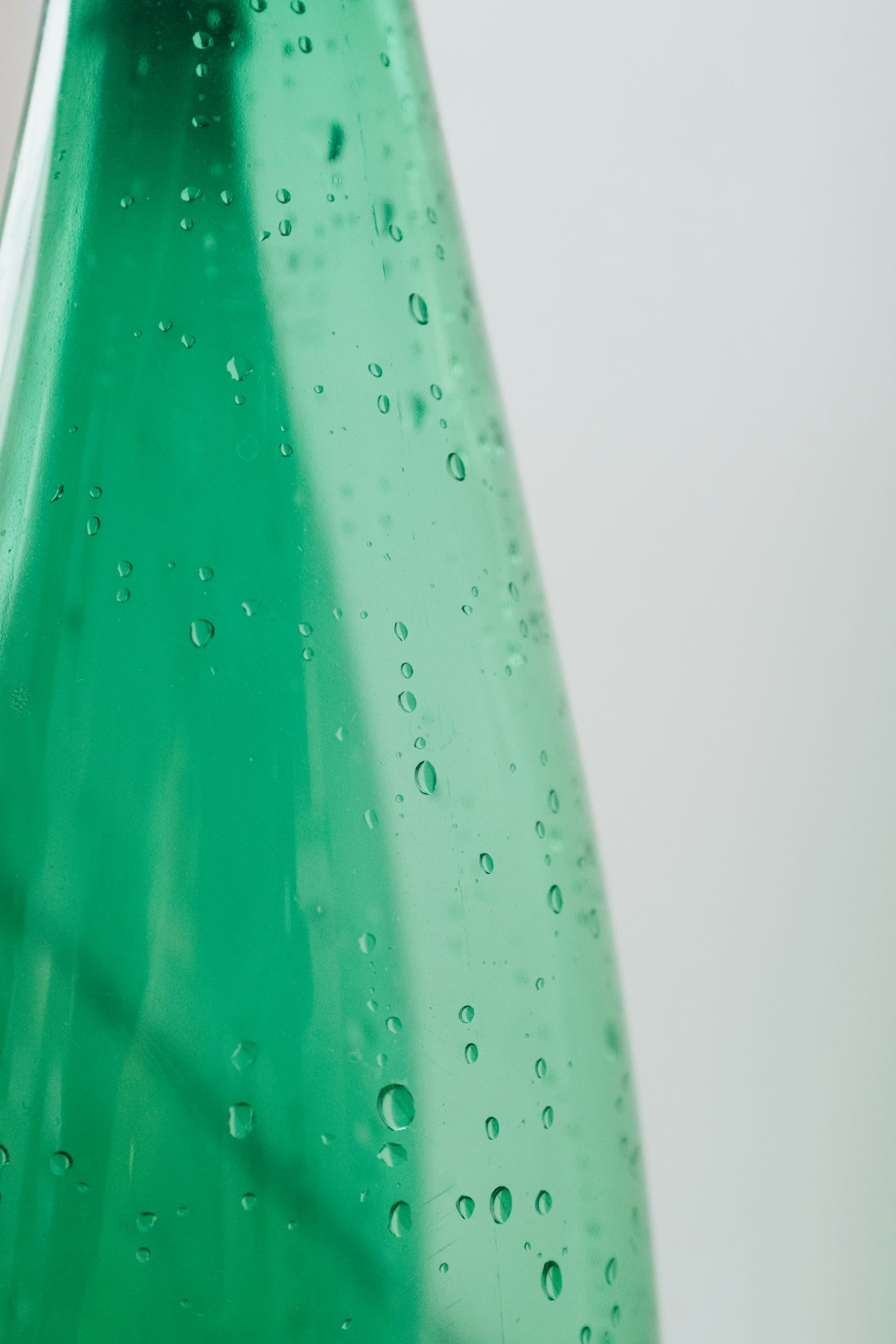
01 · KEY VISUAL
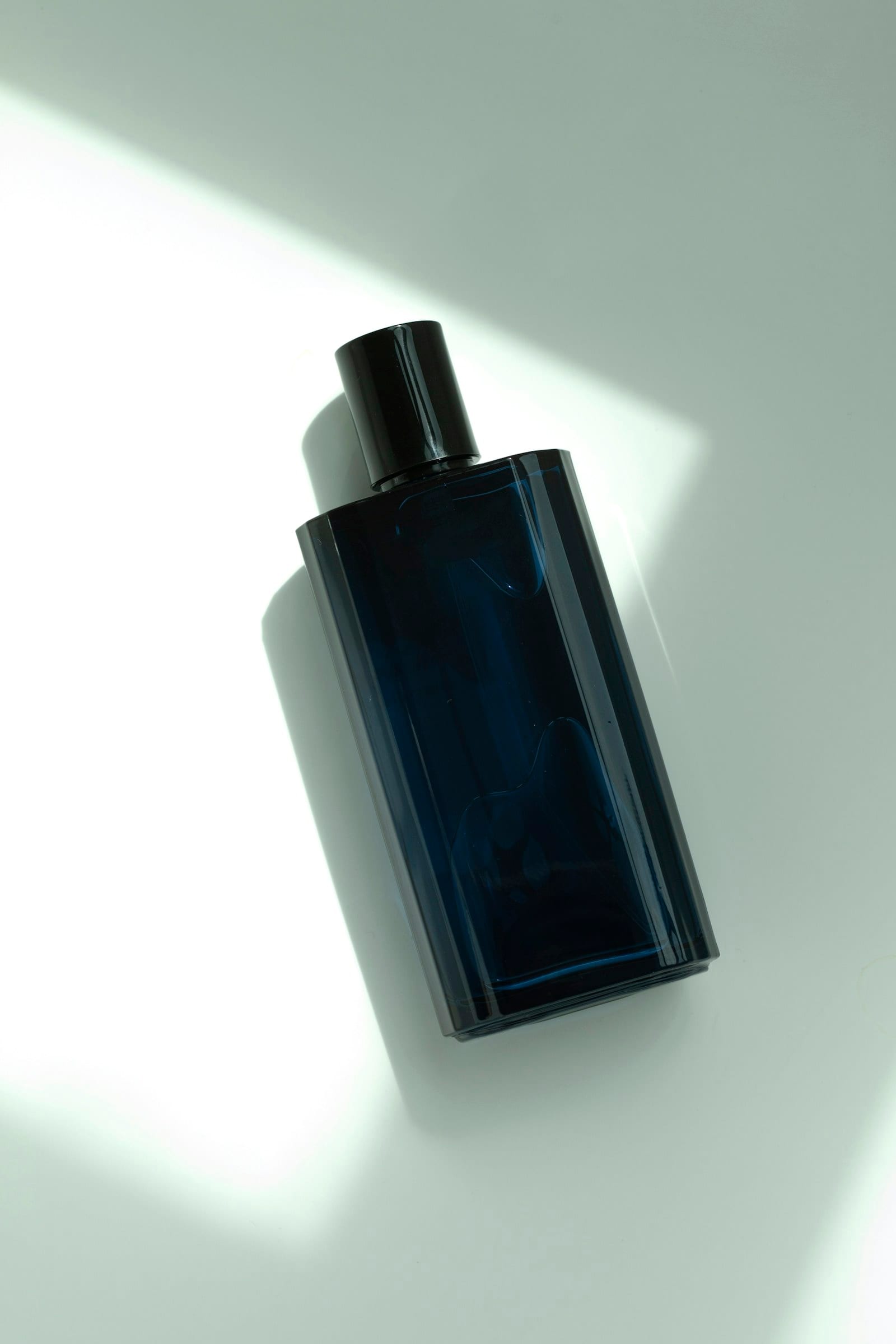
02 · SHAFT
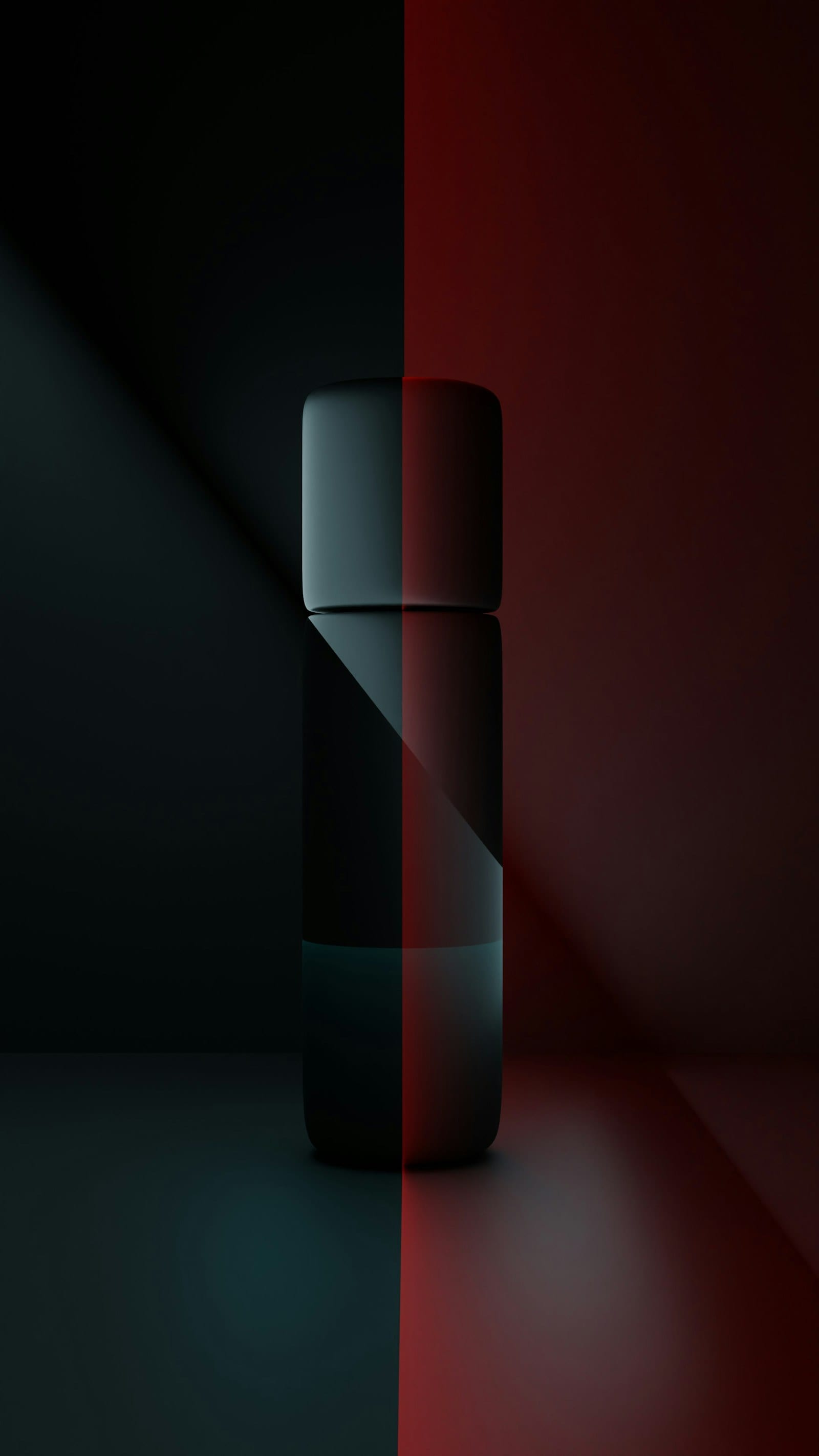
03 · SPLIT
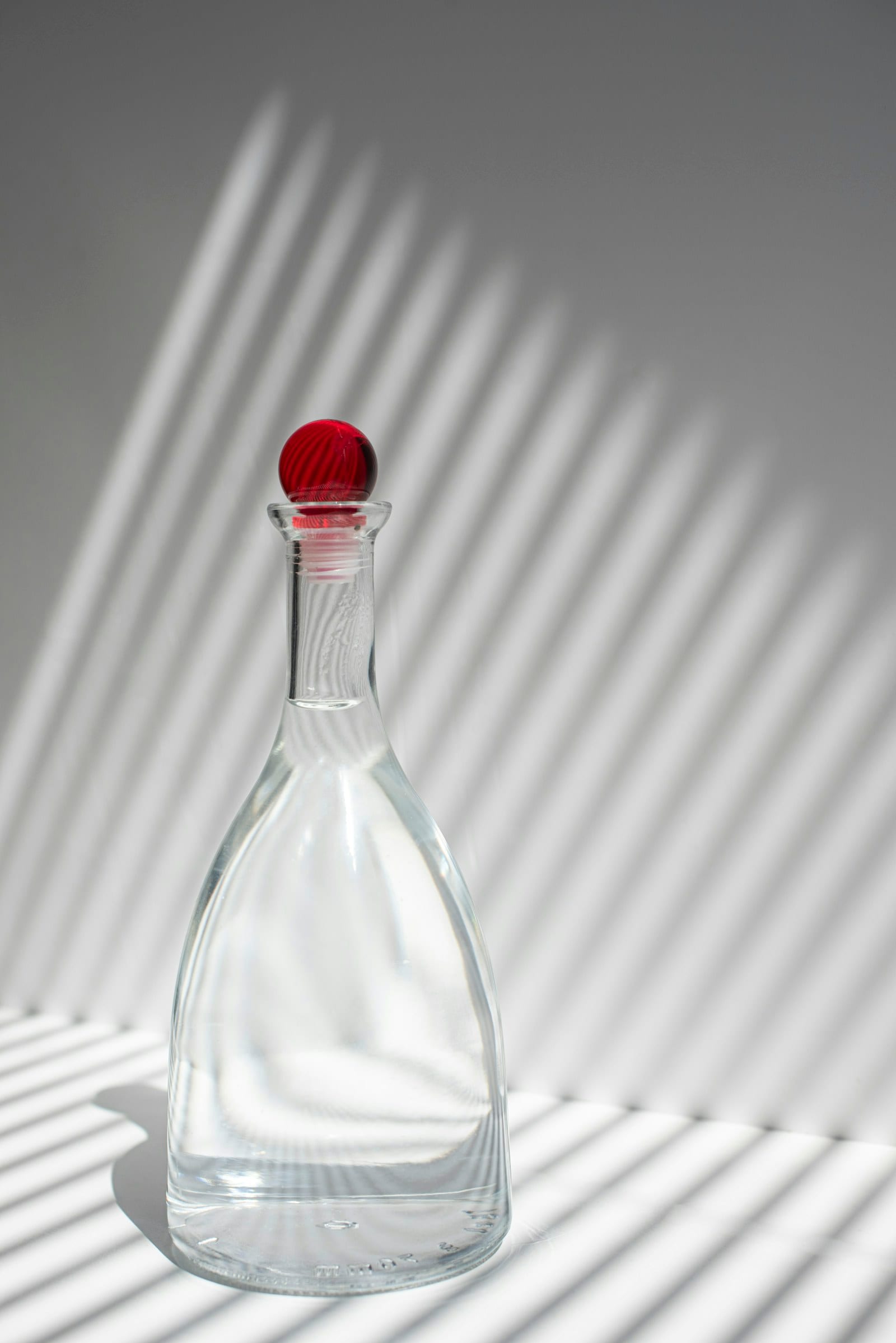
04 · DECANTER
ondine-kv-01.tif · 5464×6830 · 46.3 × 57.8 cm at 300 dpi · ΔE2000 1.12 mean against the chart, measured on the delivered file
The brief
Ondine is our first eau de parfum: green fig, cold iris, a mineral note at the base. It is named for the water spirit of the old stories, and the bottle is heavy green glass with a flat shoulder. We need the launch set: one key visual for print and the counter, three supporting frames, and crops for every placement. No model, no hands, no props that explain the notes. Make the glass and the water feel like the scent.
Three directions
Tested on a table with a stand-in bottle, the week before the shoot. One survived whole; the other two each left one frame behind.
DROPPED AS A LEAD · KEPT AS A PLATE
(a) Underwater
Idea
Sink the bottle. Let the light come down through the surface and the bubbles carry it up.
Why it went
In the tests the glass lost its edge: green bottle, green water, one tone. The bubbles read as something fizzy. We kept the bubbles alone, without the bottle, as a texture plate for layouts.
KEPT · THE KEY VISUAL
(b) Wet glass
Idea
Bead the glass with water from an atomiser and light it only from behind, through the glass.
Why it stayed
The backlight draws the shoulder in one bright line and every droplet holds a point of it. The water is on the glass, not around it, as if she has just stepped out. Nothing moves. Every frame of the set came from this idea.
DROPPED AS A LEAD · ARC KEPT AS A PLATE
(c) Spray and splash
Idea
Throw water at the bottle and freeze it at 1/8000 s with flash: energy, freshness, a moment.
Why it went
It is the picture every fresh fragrance already has, and it is loud where the scent is quiet. The splash went. One slow arc of water from the same session stayed, as a plate.
Process
01
Plan every frame before the glass is misted.
The set in one sentence, a moodboard of eleven pictures, a shot list of four frames and two plates, and a light diagram for each. The client signed the shot list, not a mood. On the day nothing was added to it.
THE SET IN ONE SENTENCE
A heavy green bottle that seems to have just come up out of the water, still beaded with it, and in no hurry to dry.
SHOT LIST
01 KEY
The glass beaded with water, backlit. 4:5 master, every crop cut from it.
02 SHAFT
The bottle on its side in one hard shaft of sun on a pale ground. The only frame lit hard.
03 SPLIT
The bottle split down the middle by red and teal light, in black. For the counter screen and 9:16 stories.
04 DECANTER
Window light through a slatted blind, long shadows. The warm frame of the set.
PLATES
Bubbles rising, one slow arc of water. No bottle; for type to sit on.
02
One light, behind the glass.
Glass shows you what is around it. So the room was black and there was one light, behind the bottle, shaped by two flags until the bottle's edges were a single bright line. The water does the rest: every droplet on the glass is a small lens, and each one carries its own point of the light. One day on set, 412 exposures, 31 selects.
LIGHT DIAGRAM · FRAME 01
KEY
One strip softbox, 30 × 140 cm, 1.2 m behind the bottle, through 3 mm opal acrylic.
SET
A black riser, 30 cm square. The glass beaded from an atomiser of filtered water, re-misted every 10 frames.
FLAGS
Two black flags either side of the bottle, 15 cm off the glass, to cut the edges to a line.
FILL
None. A black card under the lens kills the reflection of the camera in the shoulder.
CAMERA
45 MP, 100 mm macro, f/11, 1/125 s, ISO 100, tethered. Focus stacked: 6 frames.
03
Grade to a profile, not to a screen.
Raw files go through one camera profile built from a reference chart shot under the same light. The grade then does three things only: takes the warmth out of the droplets, lifts the green of the glass to the bottle's reference sample, and lets the blacks go to black without crushing the light in the droplets.
Drag across the frame. This is a grade comparison: the “before” side is the delivered key visual with the ungraded look simulated on this page, so the slider shows the direction of the grade.
BeforeAfter
04
Prove it on paper, then in numbers.
Every frame is printed at A3 on baryta and checked under a D50 viewing booth next to the bottle itself. Then the files are measured: colour against the chart, clipping, resolution, the green across the set, the profile and the rights data embedded. The results are the proof sheet below, including the check that failed.
REVIEW · 31 SELECTS TO 6 FRAMES
The delivered set
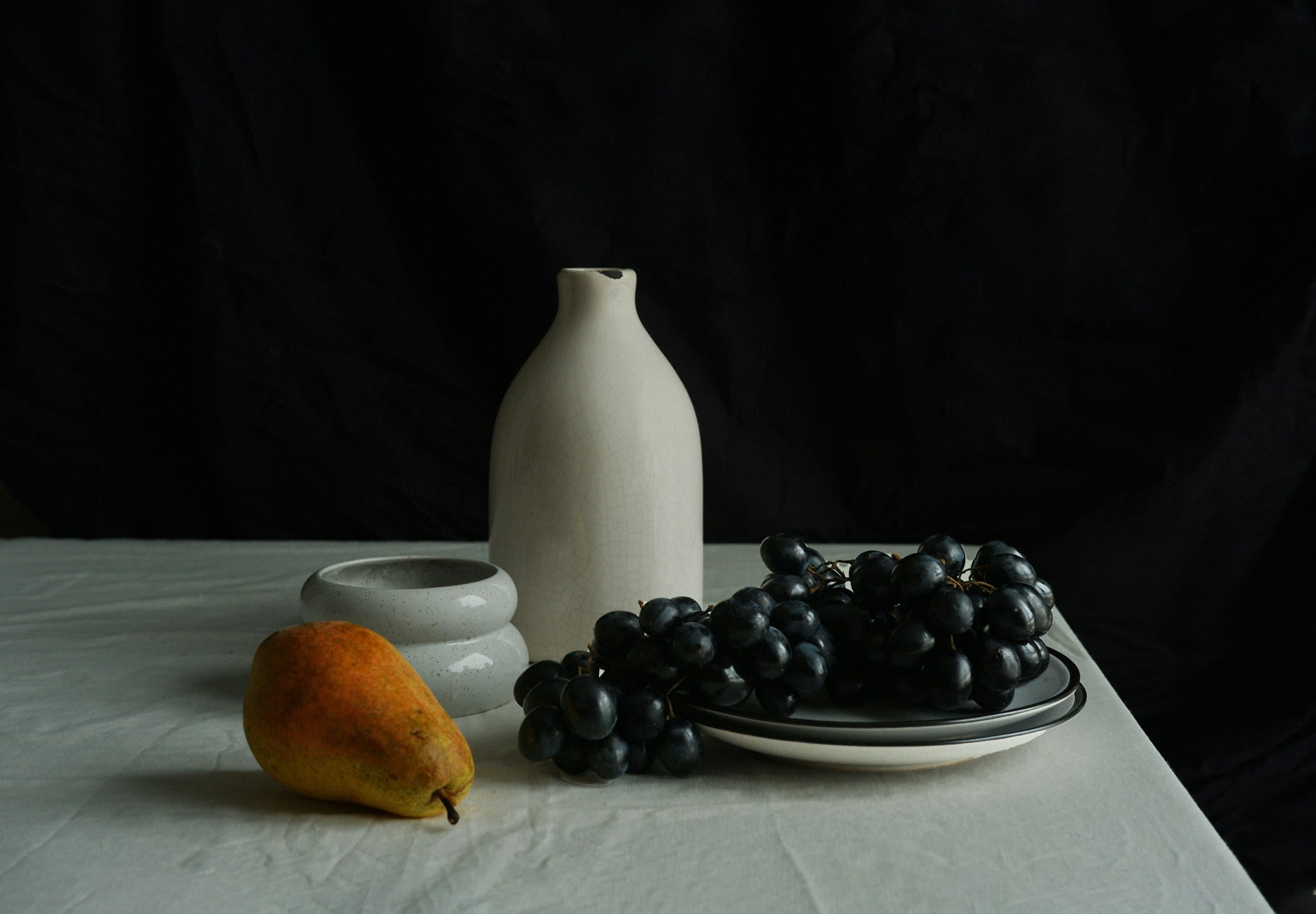
Six frames from one light: four key frames and two plates. The last two are on the sheet for honesty: the splash test that lost, and the still life pinned above the set for tone.
01 KEY VISUAL
02 SHAFT
03 SPLIT
04 DECANTER
05 PLATE · BUBBLES
06 PLATE · ARC
07 TEST · NOT DELIVERED
08 REFERENCE · NOT DELIVERED
File
What
Pixels
At 300 dpi
Crops
Profile
ondine-kv-01.tif
key visual, master, 16-bit
5464×6830
46.3 × 57.8 cm
4:5 · 1:1 · 16:9 · 9:16
Adobe RGB (1998)
ondine-shaft-02.tif
supporting frame, master, 16-bit
5464×8192
46.3 × 69.4 cm
4:5 · 9:16
Adobe RGB (1998)
ondine-split-03.tif
supporting frame, master, 16-bit
5464×8192
46.3 × 69.4 cm
9:16 · 4:5
Adobe RGB (1998)
ondine-decanter-04.tif
supporting frame, mood; plus a corrected packshot version
5464×8192
46.3 × 69.4 cm
4:5 · 9:16
Adobe RGB (1998)
ondine-plates-05-06.tif
two water plates, no bottle, for type
8192×5464
69.4 × 46.3 cm
free
Adobe RGB (1998)
ondine-web/*.jpg
every crop above for screens, 2400 px long edge
2400 long
—
as above
sRGB IEC61966-2.1
Crops for placements: 4:5 for feeds and print pages, 1:1 for the shop grid, 16:9 for banners and the counter screen, 9:16 for full-screen stories. Each crop recomposed by hand from the master, never centre-cut. IPTC rights and usage written into every file.
A concept, so there is nothing to report from the market: no reach, no sales, no engagement. What can be measured is the photographs themselves, below.
The proof sheet
Measured on the delivered masters, not by eye. Colour against a 24-patch reference chart shot in the same light; the bottle's green against a sample cut from the glass.
check
01 Key visual
02 Shaft
03 Split
04 Decanter
colour accuracy, mean ΔE2000 against the chart (max 2.0)
1.12
1.18
1.09
1.31
worst patch, ΔE2000 (max 4.0)
2.84
3.02
2.61
3.37
resolution, master
5464×6830
5464×8192
5464×8192
5464×8192
print size at 300 dpi
46.3 × 57.8 cm
46.3 × 69.4 cm
46.3 × 69.4 cm
46.3 × 69.4 cm
highlights clipped (max 0.10% of pixels)
0.04%
0.00%
0.08%
0.02%
shadows clipped, outside the black ground (max 0.50%)
0.21%
0.12%
0.37%
0.09%
bottle green against the key visual, ΔE2000 (max 2.0)
reference
1.41
1.62
4.86 didn't pass
retouch log
14 entries
9 entries
6 entries
11 entries
colour profile embedded
yes
yes
yes
yes
rights and usage metadata (IPTC)
yes
yes
yes
yes
The green holds across the set in every frame but one. In the Decanter frame the window light comes through a warm blind, and the bottle's green measured ΔE2000 4.86 from the key visual, against a limit of 2.0. A local correction on the glass brought it to 2.3 and turned the long shadows grey, which was the reason for the frame. So it ships twice: the warm version, labelled in the set as a mood frame, and a corrected packshot version for anywhere the bottle has to match the counter. Reported as a failed check, with its number. didn't pass
The retouch log lists every change made to a pixel, with the tool and the reason: dust on the glass, two droplets that had run, dust in the shaft of light. 40 entries across the four frames. Nothing on the bottle was reshaped.
The proof prints: A3 on baryta, viewed in a D50 booth next to the real bottle and the chart. The Split frame went back once: its red side printed 0.3 stop hot. It was pulled down in the grade before the numbers above were taken.
Time: two days of planning and tests, one day on set, two days of grade, retouch and proofs.
No reach, sales or engagement figures: Ondine is a concept and the campaign has not run.
What we did
Art direction, the shot list, the light, the set build, the grade, the retouch and the proof sheet. The photographs shown here are licensed stand-ins from other photographers, chosen to match the plan and credited on the credits page. The masters, the retouch log and the proof prints are available on request.